Back to: History and Political Education
By the end of this chapter, the learner should be able to;
| Understand the colonial administrative systems in Uganda. Know the reasons why different types of colonial administrative systems were used in East Africa. Know the effects of direct and indirect rule used in East Africa. Appreciate the contribution of colonial administrative systems used in East Africa. |
Major key terms
| Collaboration Colonialism Colony Direct rule Indirect Rule Protectorate Resistance Rule |
This chapter equips the learners with knowledge about colonial administration in East African states. Learners will practice various activities and tasks during the course of learning.
Teacher Preparation
- Take time to study this chapter thoroughly and understand it.
- Ensure that you have the following materials: Illustrated diagrams, Manila paper, newspaper cut-outs, and documentaries.
Hint: Possible teaching methods may include: role-playing, brainstorming, veemapping, guided discovery, discussion, etc.
Learning Materials: Video clips, charts, newspaper cut-outs, documentaries, field trip reports, and library sources.
Skills: Interactivity, communication, writing, planning, organization, photographic interpretation, analysis, critical thinking, creative thinking, categorizing, and recognition.
Teacher Instruction Using role-play introduce the learners to the concept of colonial administration systems in East Africa. Remember that some of them already have an idea about colonial administration from their previous class studies in history. Build on the knowledge and information they already have to help them to understand the topic at hand.
Introduction After teaching this chapter, the learner will be able to understand the nature and the impact of colonial administrative systems
on the people of East Africa. Colonial administration refers to the systems employed by the European colonizers to impose their imperial rule on East Africans. They will be able to know the types of colonial rule, and how they were used on the people of East Africa. Also, they will be able to understand the impact of colonial administrative methods used on East Africans.
In order for colonialists to gain full control and maintain colonial power, they had to put in place systems of administration that would favor them to establish their influence upon East Africans. Through these systems, the colonizer was able to mobilize human and other natural resources and used different methods to administer East Africa; for example, the British used indirect rule while the Germans used direct rule. Let the learners share the experience below; Task them to ask their neighbour the following questions:
- How are school rules and regulations formulated in our school?
- How are school prefects selected in our school?
- Under what circumstances may a headteacher implement school rules and regulations directly by him/herself?
- What is the importance of using prefects to implement school rules and regulations on behalf of the school administration?
- What problems do school prefects meet in exercising their powers?
Colonial Administrative Systems in East Africa
After the establishment of colonial rule in East Africa, Europeans used different methods to control and maintain their power in East Africa.
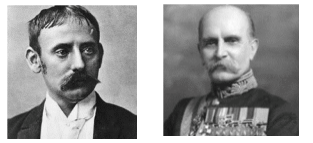
Germany used direct administrative systems under the command of Carl Peters, while Britain used indirect rule systems under the leadership of Lord Lugard as seen in figures 1.2 and 1.3:
Direct rule is where the colonial masters lived in the colony and oversaw every administrative work at the top level, but they appointed local people from different regions to administer fellow East Africans. For Germans, appointed the Akidas and Jumbes from the coastal regions to rule the rest of Tanganyika.
A Sketch Map of East Africa Showing the Extent of European Colonial Influence
The indirect rule was used in Kenya and Uganda by the British, and later in 1919 when Britain took over leadership of Tanganyika, Germans used direct rule until 1919. In indirect rule, the colonial masters left the administrative work to be done by natives of the colony using local social and political structures established by the colonial master.
All East African countries were once British protectorates until they attained independence. At independence time, Zanzibar and mainland Tanganyika were joined together to form Tanzania, and their main capital was Dar es Salaam as shown in figure 1.3.

Leave a comment